
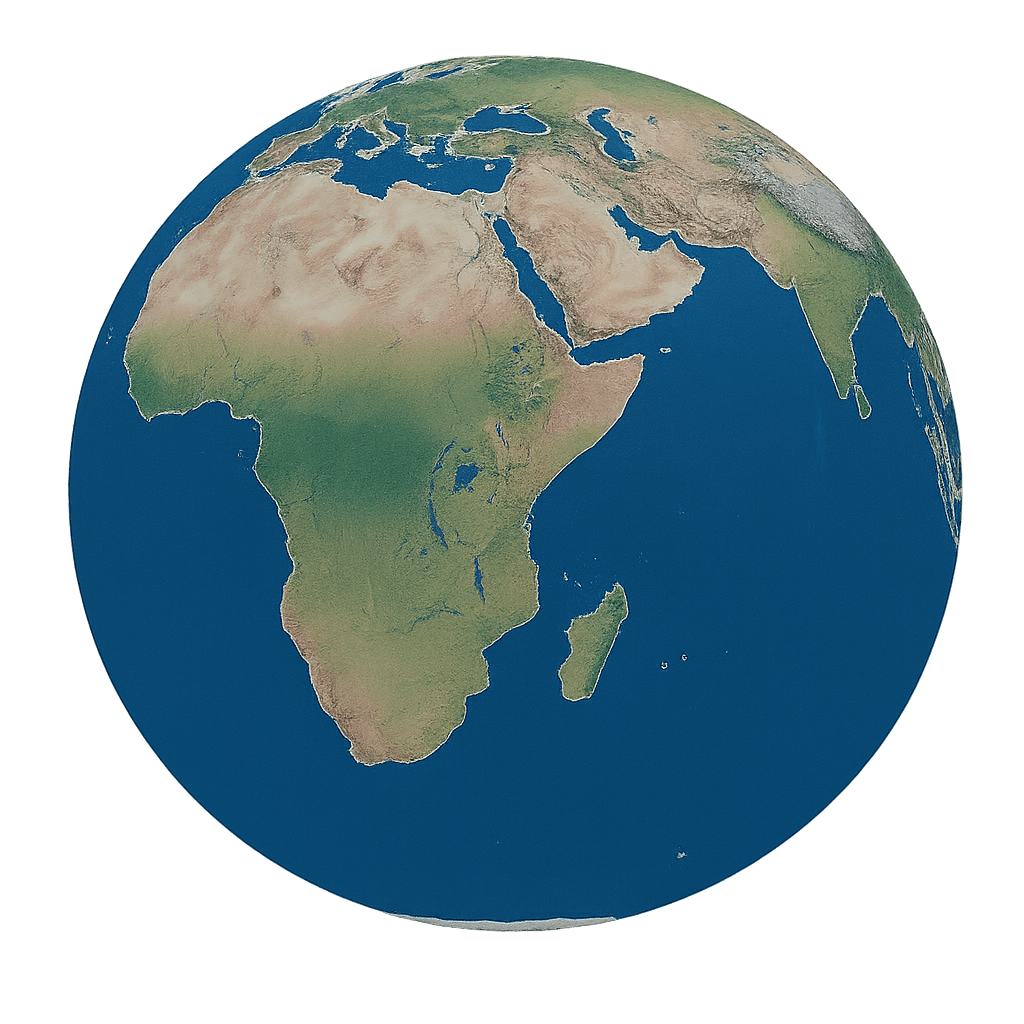
Satellite imagery market seen reaching $5.36 billion by 2030
The Business Research Company says the global satellite imagery market will grow from $2.4 billion in 2025 to $5.36 billion by 2030, driven by defense demand, environmental monitoring and better sensor technology. North America led the market in 2025, while Asia-Pacific is expected to post the fastest growth.
Why it matters: - The satellite imagery market is expanding as governments, defense agencies and commercial users demand faster, more precise geospatial intelligence. - The market’s projected growth signals bigger spending on Earth observation, real-time monitoring and climate resilience tools.
What happened: - The Business Research Company published a new satellite imagery market outlook on July 22, 2026. - The report projects the market will rise from $2.4 billion in 2025 to $2.82 billion in 2026. - The same forecast puts the market at $5.36 billion by 2030. - The report uses a 17.2% CAGR for 2026 and a 17.4% CAGR over the longer forecast period. - The report is titled Satellite Imagery Market Report 2026 – Market Size, Trends, And Global Forecast 2026-2035. - Download a free sample of the satellite imagery market report. - View the full satellite imagery market report.
The details: - Satellite imagery is Earth observation data collected through optical, radar and infrared sensors mounted on satellites. - The data is used to monitor landforms, ocean activity, weather systems, infrastructure and environmental change. - Main applications include defense and surveillance, environmental assessment, agriculture, disaster response, urban development and natural resource monitoring. - Growth is being driven by rising demand for geospatial intelligence, defense surveillance, environmental monitoring, satellite-based mapping and better satellite sensors. - The forecast also points to more investment in next-generation Earth observation satellites, real-time analytics, smart city projects and climate resilience uses. - Government and defense agencies are a major demand source because they use satellite imagery for surveillance, reconnaissance, border control and national security intelligence. - The U.S. Department of Defense requested $26.1 billion for space-based systems in its fiscal year 2024 budget, a 20% increase from the prior year, according to the Congressional Research Service in May 2023. - North America held the largest share of the satellite imagery market in 2025. - Asia-Pacific is expected to be the fastest-growing region during the forecast period. - The regional outlook also covers South East Asia, Western and Eastern Europe, South America, the Middle East and Africa.
Between the lines: - The forecast suggests satellite imagery is moving from a specialized defense tool to a broader data layer for public policy, infrastructure planning and climate work. - Multi-sensor systems that combine optical, radar and infrared data should widen the market by making imagery more useful across different weather and terrain conditions. - The emphasis on smart cities and disaster response points to stronger commercial and government overlap in the market.
What’s next: - The report expects continued spending on higher-resolution satellites and real-time analytics to support future growth. - Asia-Pacific’s growth trajectory suggests more space-capability investment and more satellite use in infrastructure programs. - The Business Research Company says its 2026 reports now include market attractiveness scoring, TAM analysis, company scoring matrices, Excel dashboards, market hotspot infographics and future trend analysis.
The bottom line: - Satellite imagery is on track for sustained double-digit growth as defense, climate and infrastructure needs push more users toward space-based data.
Disclaimer: This article was produced by AGP Wire with the assistance of artificial intelligence based on original source content and has been refined to improve clarity, structure, and readability. This content is provided on an “as is” basis. While care has been taken in its preparation, it may contain inaccuracies or omissions, and readers should consult the original source and independently verify key information where appropriate. This content is for informational purposes only and does not constitute legal, financial, investment, or other professional advice.
Sign up for:
World Agriculture Times
The daily local news briefing you can trust. Every day. Subscribe now.
Check Your Email!
We sent a one-time activation link to: .
Confirm it's you by clicking the email link.
If the email is not in your inbox, check spam or try again.
Welcome back!
is already signed up. Check your inbox for updates.