

Vegan Cheese Market Size to Hit USD 8.1 Billion; Key Players-Kite Hill, Daiya Foods, Kinda Co., Wayfare
Vegan Cheese Market Study by Mozzarella, Cheddar, Pepper Jack, Parmesan, and Gouda for Food Industry, Foodservice/HoReCa, and Households from 2024 to 2034
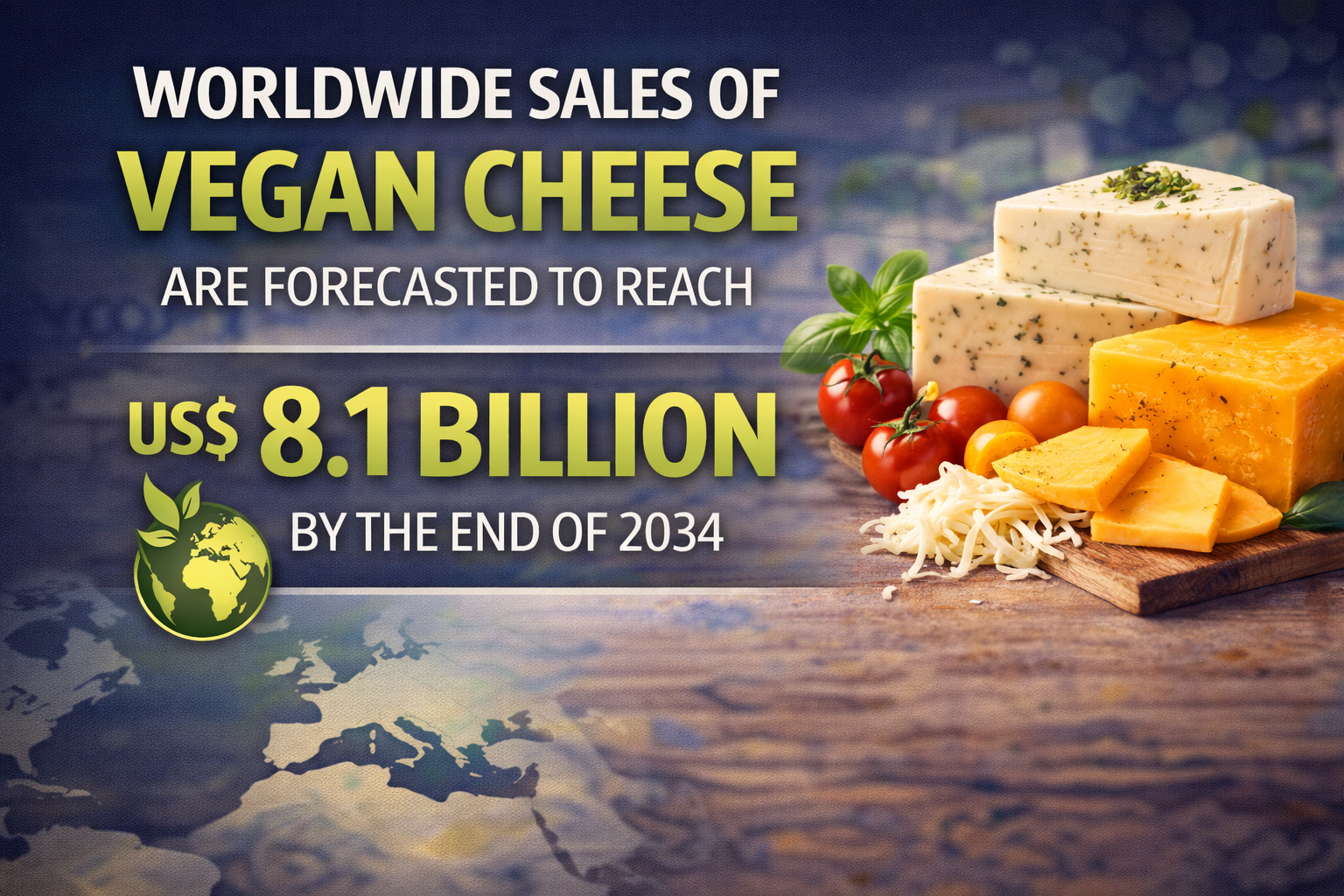
ROCKVILLE, MD, UNITED STATES, April 11, 2026 /EINPresswire.com/ -- According to Fact.MR’s latest analysis, the global vegan cheese market is valued at USD 3.58 billion in 2024 and is projected to reach USD 8.1 billion by 2034, expanding at a CAGR of 8.5%.𝗚𝗲𝘁 𝗗𝗲𝘁𝗮𝗶𝗹𝗲𝗱 𝗠𝗮𝗿𝗸𝗲𝘁 𝗙𝗼𝗿𝗲𝗰𝗮𝘀𝘁𝘀, 𝗖𝗼𝗺𝗽𝗲𝘁𝗶𝘁𝗶𝘃𝗲 𝗕𝗲𝗻𝗰𝗵𝗺𝗮𝗿𝗸𝗶𝗻𝗴, 𝗮𝗻𝗱 𝗣𝗿𝗶𝗰𝗶𝗻𝗴 𝗧𝗿𝗲𝗻𝗱𝘀: https://www.factmr.com/connectus/sample?flag=S&rep_id=10217
The market is expected to create an incremental opportunity of approximately USD 4.5 billion over the forecast period.
The industry is undergoing a structural transformation driven by mainstream adoption of vegan diets, rising lactose intolerance, and increasing demand for sustainable, cruelty-free food products. Vegan cheese is rapidly evolving from a niche alternative to a core component of modern food innovation and plant-based diets.
Quick Stats:
• Market Size (2024): USD 3.58 Billion
• Market Size (2025): USD 3.85–4.0 Billion (estimated)
• Forecast Value (2034): USD 8.1 Billion
• CAGR (2024–2034): 8.5%
• Incremental Opportunity: ~USD 4.5 Billion
• Leading Segment: Mozzarella – ~18.9% share
• Leading End-Use: Foodservice/HoReCa – ~37% share
• Leading Region: North America (~24% share by 2034)
• Key Players: Daiya Foods Inc., Miyoko’s Kitchen, Bute Island Foods Ltd., Kite Hill, Parmela Creamery
Executive Insight for Decision Makers
The vegan cheese market is shifting from alternative dairy to a mainstream food innovation category.
• Food manufacturers must invest in taste, texture, and melting performance improvements
• QSRs and foodservice operators should integrate vegan cheese into core menu offerings
• Investors should prioritize companies with fermentation-based and next-gen protein technologies
Risk: Products failing to match the sensory experience of dairy cheese risk limited repeat consumption despite initial demand.
Market Dynamics
Key Growth Drivers
• Rapid growth of vegan and flexitarian consumer base
• Increasing prevalence of lactose intolerance globally
• Rising demand for cholesterol-free and plant-based food products
• Expansion of vegan offerings in QSRs and fast-food chains
Key Restraints
• Higher price compared to traditional dairy cheese
• Challenges in replicating taste and texture of dairy cheese
• Limited penetration in price-sensitive markets
Emerging Trends
• Growth of fermentation-based and cultured vegan cheese
• Expansion of flavored and specialty vegan cheese variants
• Increasing presence in retail and supermarket chains
• Innovation in protein sources (almond, cashew, soy, coconut)
Segment Analysis
• By Product Type:
o Mozzarella leads with ~18.9% share due to strong demand in pizza and fast food applications
o Cheddar, parmesan, and gouda follow
• By End-Use:
o Foodservice/HoReCa dominates (~37% share by 2034)
o Household consumption is rapidly increasing
• By Source:
o Almond and cashew-based cheese dominate premium segments
o Soy and coconut-based products serve mass markets
Strategic Insight:
Foodservice adoption acts as a market catalyst, accelerating consumer familiarity and retail demand.
Supply Chain Analysis (Critical Insight)
Value Chain Structure
1. Raw Material Suppliers
o Plant-based inputs (almonds, cashews, soy, coconut)
o Ingredient processors and agricultural suppliers
2. Manufacturers / Producers
o Vegan cheese brands and food-tech companies
o Large-scale food manufacturers expanding plant-based portfolios
3. Distributors
o Supermarkets, hypermarkets, specialty stores
o Online retail and direct-to-consumer platforms
4. End-Users
o Foodservice operators (QSRs, restaurants)
o Retail consumers
o Food manufacturers (pizza, ready meals)
Who Supplies Whom
• Agricultural suppliers provide plant-based raw materials to manufacturers
• Manufacturers produce vegan cheese formats (blocks, slices, shreds)
• Distributors supply products to retail chains and foodservice operators
Key Insight:
Control over ingredient sourcing and product innovation determines scalability and profitability.
Pricing Trends
• Mass Segment: Soy and coconut-based vegan cheese (price-sensitive)
• Premium Segment: Cashew and almond-based artisanal vegan cheese
Pricing Influencers
• Cost of raw materials (nuts, plant proteins)
• Processing and fermentation technologies
• Branding and organic certification
Margin Insight
• Premium vegan cheese products command 30–50% higher margins
• Foodservice partnerships improve volume-driven profitability
Regional Analysis
Top Countries by Growth
• Japan – 9.0% CAGR
• South Korea – 9.3% CAGR
• United States – 8.9% CAGR
• China – 8.5% CAGR
• Germany – strong European demand base
Regional Insights
• North America: Leading market due to strong plant-based adoption
• Europe: High demand driven by sustainability and ethical consumption
• East Asia: Fastest-growing region due to dietary shifts and innovation
Developed vs Emerging Markets
• Developed markets: Innovation and premiumization-driven growth
• Emerging markets: Awareness-driven and price-sensitive expansion
Competitive Landscape
Market Structure
• Fragmented with strong presence of startups and established food companies
Key Players
• Daiya Foods Inc.
• Miyoko’s Kitchen, Inc.
• Bute Island Foods Ltd.
• Kite Hill
• Parmela Creamery
• Wayfare Inc.
• Galaxy Nutritional Foods, Inc.
Competitive Strategies
• Investment in R&D for texture and flavor improvement
• Expansion into global retail and foodservice channels
• Mergers and acquisitions to strengthen product portfolios
• Development of next-gen fermentation-based products
Strategic Takeaways
For Manufacturers
• Focus on sensory parity with dairy cheese
• Invest in scalable fermentation technologies
For Investors
• Target companies with strong innovation pipelines
• Focus on high-growth plant-based food segments
For Distributors
• Expand presence in organized retail and online channels
• Build partnerships with QSR and foodservice operators
Why This Market Matters:
Vegan cheese represents a critical shift in the global food system toward sustainable, plant-based consumption. As consumer expectations evolve, this market offers significant opportunities for innovation, investment, and long-term growth in the future of food.
𝗨𝗻𝗹𝗼𝗰𝗸 𝟯𝟲𝟬° 𝗜𝗻𝘀𝗶𝗴𝗵𝘁𝘀 𝗳𝗼𝗿 𝗦𝘁𝗿𝗮𝘁𝗲𝗴𝗶𝗰 𝗗𝗲𝗰𝗶𝘀𝗶𝗼𝗻 𝗠𝗮𝗸𝗶𝗻𝗴 𝗮𝗻𝗱 𝗜𝗻𝘃𝗲𝘀𝘁𝗺𝗲𝗻𝘁 𝗣𝗹𝗮𝗻𝗻𝗶𝗻𝗴 : https://www.factmr.com/checkout/10217
Related Reports:
Vegan Baking Ingredients Industry Analysis in the MEA: https://www.factmr.com/report/middle-east-and-africa-vegan-baking-ingredients-industry-analysis
Vegan Yogurt Industry Analysis in the USA: https://www.factmr.com/report/united-states-vegan-yogurt-industry-analysis
Vegan Ingredients Industry Analysis in the USA: https://www.factmr.com/report/united-states-vegan-ingredients-industry-analysis
Vegan Egg Market: https://www.factmr.com/report/vegan-eggs-market
About Fact.MR:
We are a trusted research partner of 80% of fortune 1000 companies across the globe. We are consistently growing in the field of market research with more than 1000 reports published every year. The dedicated team of 400-plus analysts and consultants is committed to achieving the utmost level of our client's satisfaction.
S. N. Jha
Fact.MR
+1 628-251-1583
email us here
Legal Disclaimer:
EIN Presswire provides this news content "as is" without warranty of any kind. We do not accept any responsibility or liability for the accuracy, content, images, videos, licenses, completeness, legality, or reliability of the information contained in this article. If you have any complaints or copyright issues related to this article, kindly contact the author above.
